
Ultimate Guide to Buffing Pads – Polishing Pads Explained
// We may earn a commission if you make a purchase through links on this site. Read our Earnings Disclosure to learn more.
If you’re serious about restoring the luster to your clear coat or any glossy surface, you need to get acquainted with buffing pads.
These little round wonders are the definition of working smarter and not harder!
What is a Buffing Pad?
Buffing pads, also referred to as polishing pads, are circular pads used to polish paint and other hard materials. They can also be used to apply wax, sealants, and other coatings. Most pads are made of foam but can also be made of microfiber or wool or a combination of all three materials.
Some pads are meant to be used by hand but most are meant to be used with a machine such as a Dual Action (DA) Orbital Polisher or Rotary Buffer. They come in a variety of sizes and shapes for different uses. The most common pads are circular flat foam pads such as the Griot’s Garage Flat Pads. These are also the best pads for a beginner to start with because they tend to be more forgiving in use and care.

What Do I Need to Attach My Buffing Pad to My Polisher?
Buffing pads are attached to polishers by what is called the Backing Plate. This is a plastic or rubber disk that has a threaded arbor on one side (to screw into or onto your polisher’s spindle) and a hook and loop (Velcro) face on the other side (to stick your pads).
DA polishers use a backing plate with a male threaded arbor to screw into your polisher and Rotary polishers use a female threaded arbor to thread onto your polisher.
DA Polisher’s like the Harbor Freight 6″ Polisher and the Griot’s Garage 6″ Polisher come with a backing plate. All you need to run a pad on them is to buy a 6″ pad. If you want to run smaller pads such the common 5″ pads you’ll need to purchase a smaller backing plate such as this 5″ Meguiar’s DA backing plate. You can also purchase this convenient kit from Griot’s Garage that contains a 5″ backing plate and a handful of the most common 5″ pads.
The Porter Cable 7424xp, at the time of this writing, does not come with a proper backing plate for running foam pads so you’ll need to purchase one such as the 5″ Meguiar’s DA Backing Plate mentioned above. Sometimes you can find the polisher bundled with a backing plate (usually 5″).
How are Buffing Pads Made?
Most buffing pads are made of two materials glued together. The main material is typically foam, which will hold the polish and contact the paint. The secondary material is the backing material (usually hook and loop known commonly as Velcro) that allows the pad to stick to the backing plate on the polisher and be easily removable. Pads that use microfiber or wool will often have the fiber glued to a foam core which is then glued to a Velcro backing.

The foam in foam polishing pads is usually made of either open or closed cell foam. In very simplistic terms, closed cell foam doesn’t absorb liquids as easily as open cell. This reduces the amount of polish consumed but makes the pads harder to clean.
How Do Buffing Pads Work?
Buffing pads are designed to hold the abrasives in polishes at the surface of the pad. When the abrasives are “stuck” to the surface of the pad they turn the pad into the equivalent of ultra-fine sand paper. The porous nature of the pad absorbs spent oils from the polish.
Pads are also flexible so that they can apply even pressure to curved surfaces. If pads weren’t flexible it would be easy to remove uneven amounts of paint and damage your finish.

Pads also act as absorbers of heat and transports of cool air to the surface you are working on. Since abrasion is a result of friction and friction generates heat, this is very important. Heat can damage both the surface you’re working on and the pad itself.
What is the Benefit of Buffing Pads?
Buffing pads provide a more efficient means of working polish into your finish to remove defects, greatly reducing the time you spend correcting your finish.
Pads hold polish much more evenly than a towel would and are easy to attach to a machine, allowing for a more even and consistent material removal.

Polishing pads are better at holding the abrasives in polishes against the surface you’re polishing. This allows you to use less polish than you would with a towel.
Pads also provide a safety barrier between your machine or hand and the surface you’re working on. This keeps you from accidentally scratching the surface you’re trying to correct.
As stated above, buffing pads also help keep the surface you’re working on cool, reducing damage to the surface or the pad.
Last, but not least, a good pad will stay together and not shed material onto the surface you’re working on.
What Makes a Quality Buffing Pad?
- Good flexible construction of the main media such as foam, microfiber, or wool that won’t fall apart during use
- Good adhesion between the backing material and the pad
- Material construction that allows for airflow and spent polish absorption
- Clear labeling or distinguishable colors to separate different types of pads
- Manufacturer backed warranty in case a pad fails prematurely (it happens to the best pads sometimes)
What types of Buffing Pads for Cars Exist?
There are three major classifications of pads. There are foam, wool, and microfiber buffing pads. Each of these pads can be used on either Dual Action Orbital or Rotary Polisher as long as the pad is the same, or slightly larger, diameter as the backing plate on your chosen polisher.

Within these classifications of pad are several sub categories of pads. These sub categories determine the amount of aggressiveness (also known as correction or cut) a pad has. More aggressive pads remove paint to remove defects faster but don’t leave a perfectly smooth finish. Less aggressive pads remove paint slower but leave a smoother finish behind.
You start with aggressive pads to remove the worst defects first and then step down to less aggressive pads to remove the marks from the aggressive pads and leave behind a nicer finish.
Foam Pads
Foam pads typically fall into three main categories: Compound, Polish, and Finish. Some manufacturers have more categories between these and that just means they allow a smaller step down between levels of cut. Generally, the more aggressive a pad is marked as the stiffer the foam is that was used in the construction of the pad.
Compounding
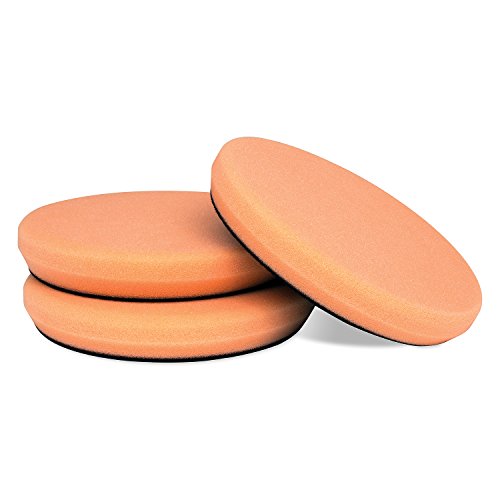
- Most aggressive
- Used with a cutting compound that has a high level of cut or aggressiveness
- First step in removing surface defects
Polishing
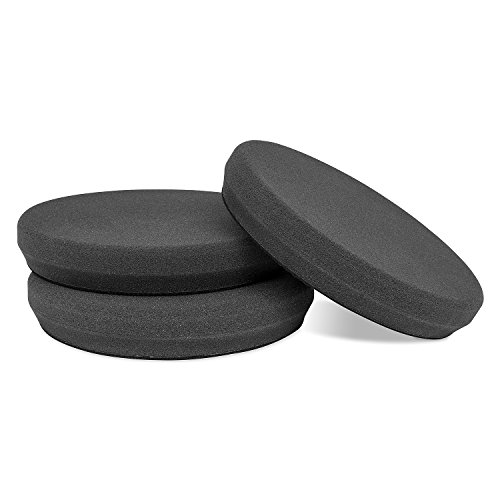
- Used with a polishing compound that has a low level of cut or aggressiveness
- Second step in removing surface defects
Finishing
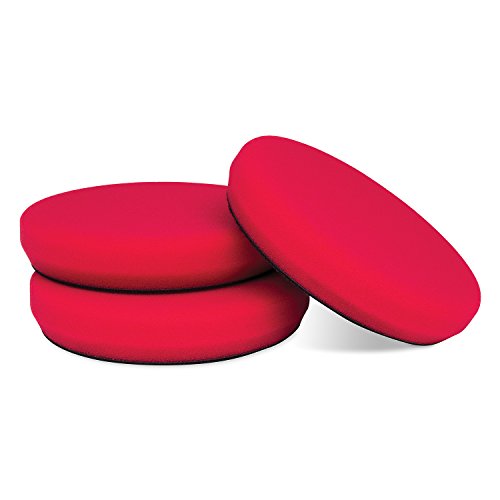
- Used with a last step product like a sealant or all in one product such as a cleaner wax that have low to no cut or aggressiveness
- Last step in restoring and protecting surface finish
Can you mix and match pads and polishes? Yes. Just remember an aggressive compound on a non-aggressive pad will provide a level of aggressiveness/cut somewhere in between the two.
Cutting Pad vs Polishing Pad
Strictly speaking, these can be names for the same thing depending on the manufacturer and retailer. Though, commonly, a cutting pad is another name for a compounding pad and a polishing pad is the name for the step down in aggressiveness that you would use to remove the micro marring from the cutting pad.
Polishing Pad vs Finishing Pad
Like above, it depends on the manufacture. Some use the most to least aggressiveness naming scheme of Cutting -> Finishing -> Wax Pad and some will use Compounding -> Polishing -> Finishing. And some use all four. Unfortunate, you just have to consult the pad manufacturer’s documentation.
Flat Pads Vs. Textured Pads (CCS, Hex Logic, Waffle)
Manufacturers generally claim textured pads run cooler and therefore last longer. I’ve personally seen no difference in performance of flat vs. textured pads. One important thing to note is that some polishers do not play nice with textured pads. Forced rotation buffers such as the Flex 3401 tend to walk around the paint on you when used with a textured pad.
In general, I opt for flat pads. They are typically cheaper, more abundant, more durable, and just plain work.
Microfiber Pads
In general, there are two types of pads: cutting/compounding pads and polishing/finishing pads.
Microfiber pads are a relatively new addition to the detailing scene. Because of this there aren’t any real standards between manufactures for what separates a cutting pad from a polishing pad.
Some manufactures vary the thickness of the foam, some use different microfiber, and some use a combination of both. Stick to one manufacturers system and you’ll be fine. I don’t recommend mixing and matching microfiber pads.
Cutting Microfiber Pads
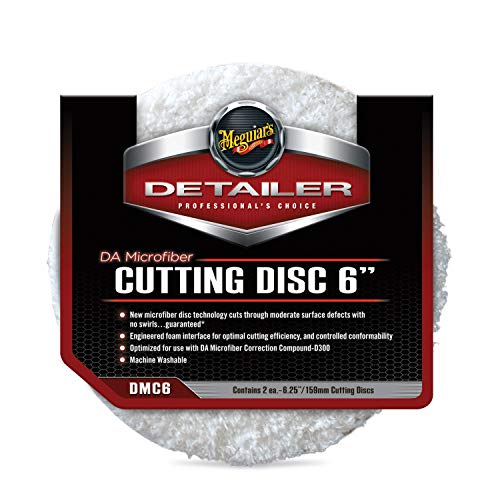
- Used with cutting compounds
- More aggressive
- Removes paint faster but doesn’t finish well
Finishing Microfiber Pads
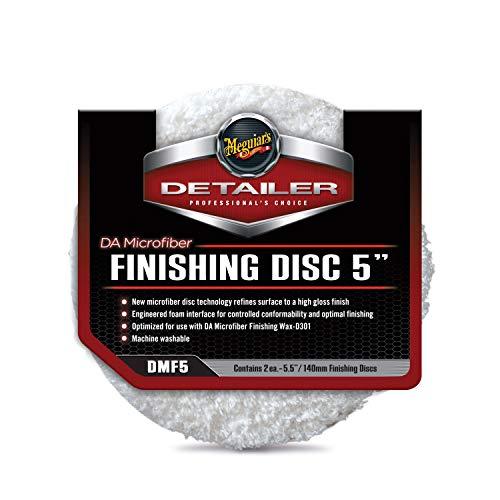
- Used with polishing compounds
- Less Aggressive
- Removes paint slower
Microfiber Polishing Pads vs Foam
Microfiber pads do tend to be more aggressive than foam pads. The fibers themselves are an abrasive. On soft, dark paints it’s often possible to still see micro marring from a microfiber finishing pad and polish. Many people like to use a foam finishing pad with polish as the last step on these paints to finish down to a flawless surface.
Wool Pads
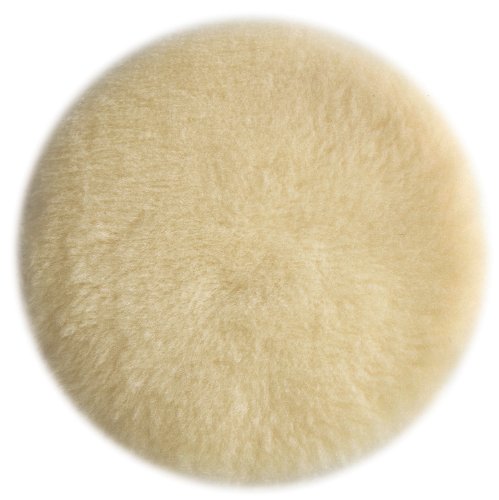
Wool Pads are typically used on rotary polishers. They do make wool pads for DA polishers for heavy correction work but microfiber has all but taken its place.
Wool Pads are graded similarly to microfiber pads with compounding/cutting pads being the most aggressive and polishing/finishing pads being the least aggressive. Just like foam pads, some manufactures have pads that rate between these two classifications so you’ll have to reference their system to know more.
On most finishes, wool pads will not finish down to a flawlessly smooth finish. The wool fibers themselves are abrasive. You will want to follow up with a foam finishing pad and a good polish to remove any micro-marring left behind by the wool fibers.
When to Use Wool Buffing Pads
Wool should really only be used for a very heavy initial cut on rough paint. It’s very aggressive. It will need to be compounded out with a foam pad afterwards because it will leave marring and holograms. These days I would relegate the wool pads to a rotary polisher as that’s what they were originally designed for and they are really meant for speed of cut, much like the rotary itself is.
If you’re using a Random Orbital DA Polisher then try a microfiber cutting pad with a heavy compound instead if you need a faster cut. You might be surprised at how aggressive, yet safe this combo is.